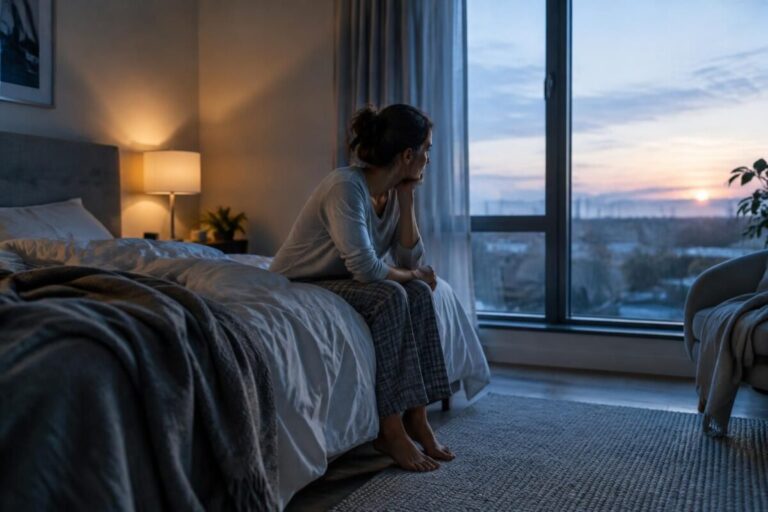
Relaxing habits: which ones really help your sleep
Hello, this is Hélène. The sleep-supporting habits are simple: a regular routine, fewer screens, and a soothing ritual tailored to your needs.
The trap is to believe that a single tip will make everyone sleep. A few actions repeated each evening can nevertheless help your body slow down and recognize the moment of rest.
Things to do right away
- Choose a realistic bedtime and keep it as stable as possible.
- Reduce screens in the last half-hour before bed.
- Try 2 to 5 minutes of deep breathing, without trying to control each breath.
- Prepare a dim ambiance and a calm, comfortable bedroom.
- Choose an easy-to-repeat ritual: soothing reading, gentle stretches, or a caffeine-free relaxing herbal tea.
If thoughts loop when it’s time to sleep, these tips to ease the evening mental overload can complement your routine. And if your environment keeps you alert, discover how your bedroom can influence your sleep.
Relaxing habits that promote sleep
A bedtime routine works mainly because it is predictable. By repeating the same steps in the same order, you create a reference point that helps transition from the daytime rhythm to that of rest.
The regularity of sleep matters more than a perfect ritual. Going to bed and waking up at relatively close times, including on weekends, helps stabilize daily cues.
Reducing screens and dim ambiance
Notifications, videos, and messages keep your attention engaged while the body needs to slow down. Start by putting your phone away or enabling silent mode during the last 30 minutes of your evening.
Replace bright light with a dim ambiance. This change does not guarantee falling asleep, but it makes the moments leading up to bedtime calmer and less stimulating.
Deep breathing, meditation and calming reading
Deep breathing can help you move your attention toward a simple and regular sensation. Inhale slowly, then let the exhale lengthen a little, without forcing or holding your breath.
Meditation does not need to be long: a few minutes of observing your sensations is enough to take a pause. If staying still annoys you, calming reading can offer a more natural transition.
Warm bath, gentle stretches and relaxing herbal tea
A warm bath taken before bed can become a pleasant signal of relaxation. Gentle stretches are another option if your body remains tense after a day of sitting or active; favor comfortable movements, without pain.
A caffeine-free relaxing herbal tea can accompany the ritual, but it is not a sleep aid. If drinking right before bed wakes you up to go to the bathroom, have it earlier or choose another habit.
| Habit | How to try it | What to remember |
|---|---|---|
| Reducing screens | Put the phone away 30 minutes before bed | Reduces evening stimulation |
| Deep breathing | Take a few minutes to breathe calmly | A simple pause, with no goal to perform |
| Calming reading | Read a few pages in soft light | Choose content that isn’t too stimulating |
| Warm bath or gentle stretches | Keep the action pleasant and comfortable | To adapt to your preferences and schedule |
| Sleep regularity | Gradually stabilize bedtimes and wake times | Consistency helps establish cues |
The trap: wanting to test all the tips at once
Changing your entire evening all at once can quickly become a constraint. Imagine Nora, who adds meditation, a bath, herbal tea and reading in one evening: if she doesn’t like this plan, she risks abandoning it the next day.
It’s better to start with a simple gesture and observe what works for you for a few days. A relaxing habit should lighten your evening, not become a new source of pressure.
Set up a bedtime routine in 3 steps
- Choose a single gesture. For example, turning off notifications or reading a few pages before lights out.
- Pair it with a regular moment. Place it after an already anchored action, such as brushing your teeth.
- Observe and adjust. After a week, keep what soothes you and replace what seems artificial.
If sleep difficulties persist, affect your days or are accompanied by other symptoms, talk to a health professional. A routine can support rest, but it does not replace advice tailored to your situation.
Frequently asked questions about relaxing habits and sleep
How long before bed should you start your routine?
You can start with the last 20 to 30 minutes of the evening. The essential is to choose a realistic and regular ritual, rather than aiming for a perfect duration.
Does meditation help everyone fall asleep?
Not necessarily. It can help some people slow down, while others may prefer reading or doing gentle stretches. Choose the activity that relaxes you without requiring excessive effort.
Is a relaxing herbal tea enough to sleep better?
No, a herbal tea can accompany a calm moment, but it does not guarantee sleep. Prefer a caffeine-free infusion and avoid drinking too close to bedtime if it wakes you during the night.
Which habit should you try first?
Start with the one that seems easiest to repeat, such as reducing screens or reading a few pages. Try it for a few evenings before adding another change.
I hope these tips have been helpful. See you soon! — Hélène