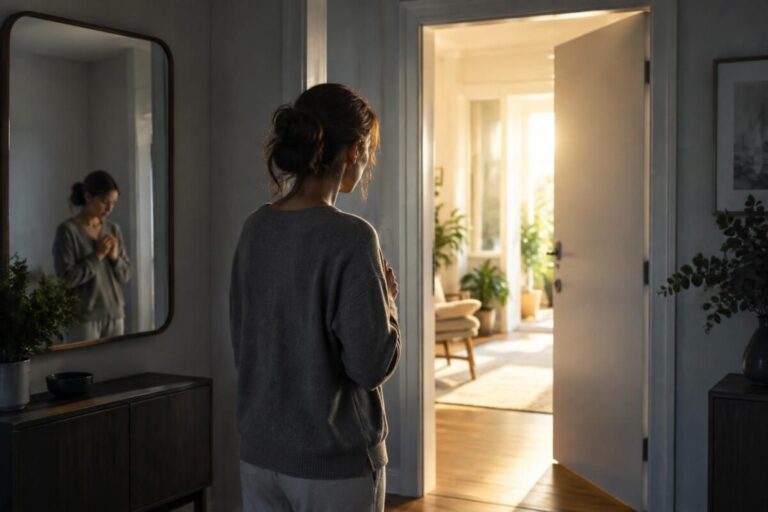
How to create a lasting habit of serenity
Hey friends, it’s Hélène. To create a lasting habit of serenity, choose a very short soothing gesture, pair it with a stable moment in your day, and simply resume after a lapse. The aim isn’t to be calm all the time: it’s to have an accessible anchor when the pressure rises.
To create a lasting habit of serenity that accompanies you, it is essential to understand how our internal mechanisms work, notably through mindfulness or meditation, and to adopt effective strategies such as routine planning and replacing bad habits. From there, you can combine rigorous planning and smart behavior change so that inner peace becomes natural and not a constant effort.
Finding serenity in daily life: a reference point, not an obligation
A routine can help provide anchors, but it does not guarantee the disappearance of anxiety nor a precise medical benefit. The WHO offers stress management techniques to practice a few minutes per day. Choose a practice that suits you and adapt it to your situation. If distress persists, a professional can help.
Simple steps to establish your calm ritual
Make no mistake: building a lasting habit requires consistency and strategy. A few keys help you achieve it without getting lost:
- Daily meditation : 5 to 10 minutes are enough to set aside a moment of calm. It’s not about blanking the mind or achieving a performance.
- Creating a peaceful corner at home : a neatly arranged space to inspire tranquility at a glance.
- Yoga : more than an exercise, a grounding vector that balances body and mind.
- Gratitude : writing down three positive things each day anchors a serene mindset.
- Choosing your relationships : surround yourself with people who support your inner peace.
How a well-thought-out routine transforms your stress management
Stable anchors can make it easier to pause during a busy day. Thus, establishing a routine is not just a luxury; it’s a real tool for stress management that creates a solid foundation of serenity. Repetition and automation of calm gestures help conserve mental energy and prevent burnout. To effectively integrate these routines, you must also recognize the importance of mastering your insecurities, replacing them with driving powers. This serenity is easier to build when the home keeps simple and reassuring family anchors.
Best practices for lasting serenity
| Habit | Effect on serenity | Tip for integrating it |
|---|---|---|
| Mindfulness meditation | Can help observe thoughts without clinging to them | Start with 3 minutes per day, gradually increase |
| Mindful breathing | Can facilitate a pause, depending on the person | Practice before each stressful task |
| Creating a zen space | Supports well-being through the physical environment | Green plants, soft light, decluttering |
| Structured day with breaks | Preserves mental energy, emotional balance | Alternate work and mini-meditations |
| Gratitude rituals | Helps some people notice pleasant moments | Keep a gratitude journal every evening |
Turning a serenity intention into a concrete habit
Instead of “I want to be more serene,” write an observable intention: “after closing my computer, I take two minutes to walk without a screen.” Plan a minimal version for difficult days, for example thirty seconds of pause. These are starting points, not mandatory durations.
Try a single ritual for a week. Simply note whether you did it and whether it helped you, then adjust the schedule or the practice. If you miss a day, resume at the next cue without doubling the session. A useful habit must remain flexible enough to fit into your real life.
Sticking with it for lasting serenity in your life
The secret of lasting serenity lies in daily commitment. Like any habit, the initial intense serenity can give way to calmer spells. The important thing is to stay faithful to your routine. Working on your breathing, giving yourself mindful pauses, and building a positive social circle are all elements to integrate to maintain this calm. Discovering how to train your confidence like a muscle or establishing powerful morning habits can also nourish this inner strength in the long term. To maintain this serenity over the long term, it is useful to keep simple anchors to better organize your life.
Creating a habit is not a sprint, it’s a marathon. A simple meditation routine, paired with balanced management of the environment and emotions, will allow you to progressively install a routine that fosters lasting calm and deep well-being.
How to start a serenity habit without getting discouraged?
Start with short meditation or breathing sessions and choose a specific time of day; the key is consistency more than duration.
Can I use meditation even if I am very stressed?
You can try briefly if you find it pleasant. If focusing on your thoughts or your breathing increases discomfort, stop and prefer a simple activity like walking or observing what surrounds you.
What is the impact of a calming environment on serenity?
A zen space facilitates relaxation, reduces mental agitation, and invites regular mindfulness practice.
How to replace a bad habit with a good serenity-inducing one?
Identify a triggering situation and choose a concrete response, such as a pause with natural breathing. Stress cannot be eliminated on command.
Is it useful to practice yoga for serenity?
Absolutely, yoga links body and mind, promotes relaxation, and creates lasting calm.
Many thanks for reading. Warm regards, Hélène.