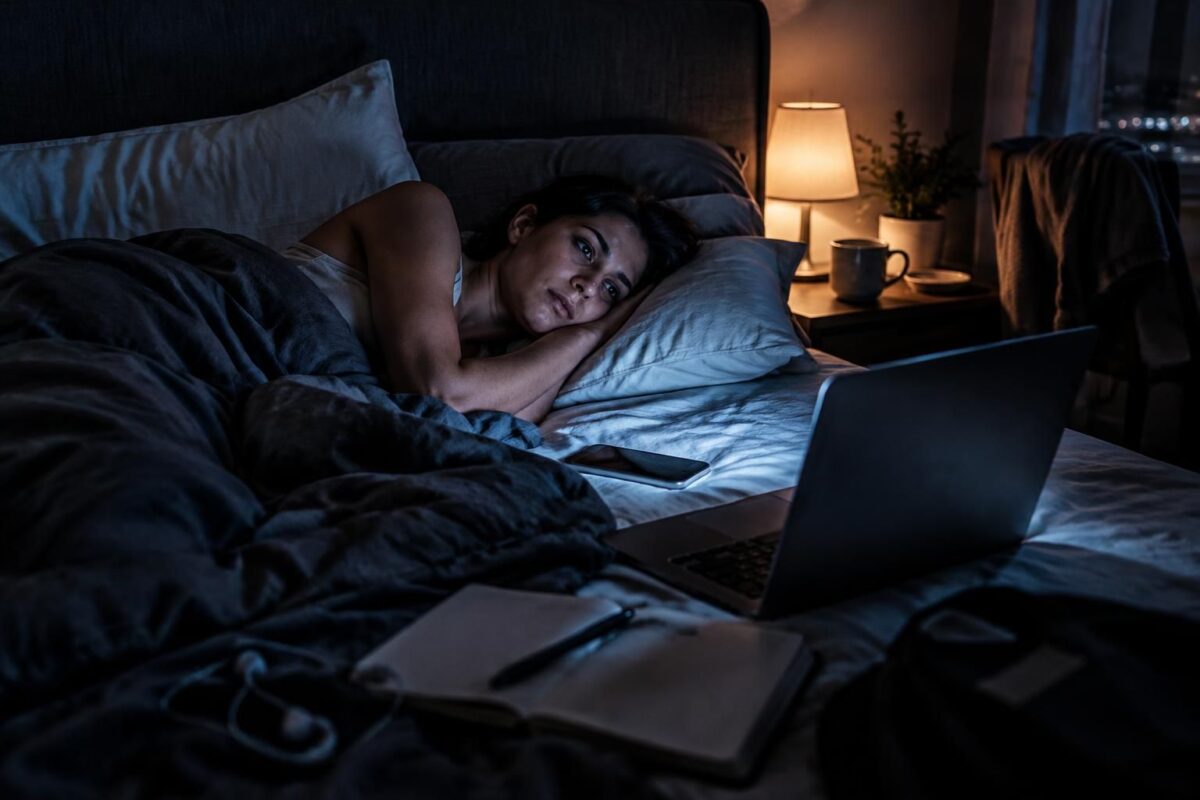
Disturbed sleep: why having evenings that are too full costs you dearly
Hello, it’s Hélène. To protect your sleep, lighten your last hour of the day: fewer screens, tasks, and stimulants, more calm and regularity. Busy evenings keep the body awake as night approaches. In time, falling asleep shifts, and the lack of recovery is felt the next day.
The right habits to adopt
- Keep screens away about an hour before bed, or dim their brightness if you can’t avoid them.
- Eat dinner earlier and lighter when possible, especially if late meals bother you.
- Avoid caffeine in the late afternoon and don’t rely on alcohol to sleep better: it can fragment the night.
- Reserve the bed for rest rather than work, emails, or long scrolling sessions.
- Choose a calm ritual of 20 to 30 minutes: reading, gentle stretches or slow breathing.
These actions don’t require a perfect evening, but a clear signal sent to your body: the day is slowing down. To understand how mental load shows up at bedtime, also read this article on the link between disrupted sleep and mental overload, then discover why some evening routines become hard to keep.
Why busy evenings disrupt sleep
The trap is trying to fit the whole day into its last hours. Responding to messages, finishing a task, watching a series, and preparing for the next day keeps you awake, especially when the mental load remains high.
The bright light from screens can also delay the biological signals associated with night. But it isn’t the only culprit: irregular schedules, nocturnal stress, heavy meals, or late caffeine can add up and turn a temporary difficulty into a habit.
Sleep debt builds up little by little
A shortened evening doesn’t necessarily cause chronic fatigue on its own. However, regularly nights that are too short or fragmented can lead to a lack of recovery, a more fragile mood, and a drop in productivity.
Imagine Léa, who finishes her work on her computer in bed, then scrolls on her phone “just five minutes.” She falls asleep later than planned and wakes up tired. The problem isn’t a lack of willpower: her environment associates the bed with activity rather than rest.
Evening habits that rob you of sleep
A well-filled evening isn’t automatically harmful. It’s mainly the accumulation of stimulating habits, without a transition to rest, that can maintain wakefulness and make falling asleep more difficult.
| Habit | Possible effect | Simple alternative |
|---|---|---|
| Screens until bedtime | Prolonged wakefulness and delayed bedtime | Schedule a screen-free break before night |
| Heavy and late dinner | Digestive discomfort or awakenings in some people | Move dinner earlier and choose a moderate portion |
| Caffeine in the late afternoon | Sleep onset potentially delayed | Switch to a caffeine-free beverage |
| Alcohol before sleep | Sleep sometimes more fragmented | Choose a non-alcoholic drink |
| Working in bed | Association between bed and activity | Set up a separate workspace |
Effects vary by person and quantity. A dinner three or four hours before bed may suit some, but this guideline doesn’t need to become a rigid rule: observe what actually improves your nights.
The evening routine must stay realistic
An effective evening routine isn’t a never-ending list of good habits. If it becomes an extra constraint, it may increase pressure instead of easing nighttime stress.
Choose one or two easy actions to repeat. For example, Léa can charge her phone outside the bedroom and prepare her things for tomorrow before settling in to read. This small change marks a clear separation between work and rest.
Getting lighter evenings back in three steps
- Notice when the evening starts to overflow. For a week, simply note the time of the last screen, dinner, and bedtime, as well as your energy level upon waking.
- Choose a single priority change. If the phone delays your bedtime, move it away. If dinner bothers you, try a lighter or earlier meal. Avoid changing everything at once.
- Observe the effects and adjust. After a few days, keep what helps you and change what doesn’t. Steady improvement matters more than a perfect routine.
A good sleep hygiene often starts with a less dense evening, not a radical transformation. If difficulties persist, strongly affect your days or are accompanied by signs such as nocturnal breathing pauses, talk to a health professional.
Frequently asked questions about busy evenings and sleep
How long before sleep should you stop using screens?
You can try putting them away about an hour before bed. If that isn’t realistic, reduce the brightness and choose a calm activity to finish the evening.
Does alcohol help you sleep better?
It can give a feeling of drowsiness, but it can also fragment sleep during the night. A non-alcoholic drink is a better choice near bedtime.
What to do if my sleep remains disrupted despite a calmer routine?
Note your timings and awakenings for one to two weeks, then consult a doctor if the difficulties persist or interfere with your daily life. Stress, certain disorders, or medical factors can also play a role.
Should you dine exactly three or four hours before bed?
This timing is a guideline, not an obligation. A lighter meal and sufficiently distant from bedtime can help if you experience digestive discomfort, but adapt it to your rhythm and your sensations.
Thank you for reading! Feel free to share your observations in the comments. — Hélène